


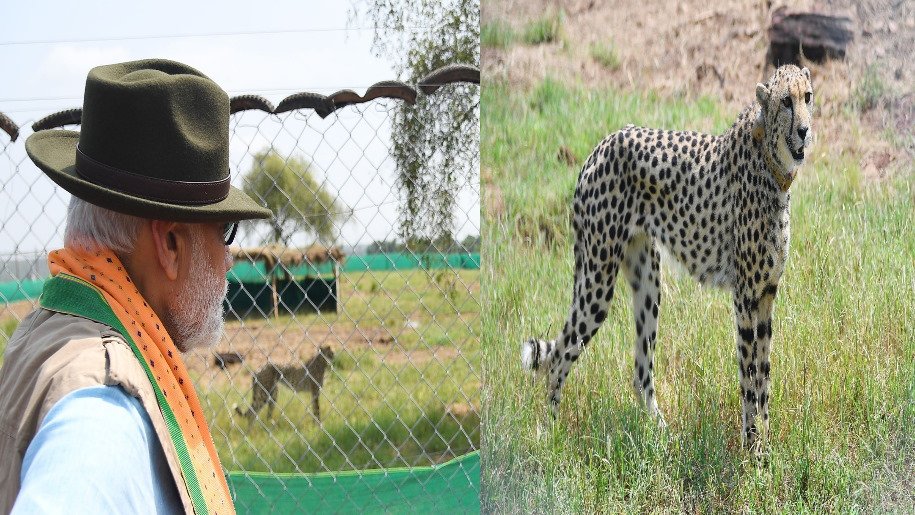
Prime Minister Narendra Modi on Saturday released wild Cheetahs – which had become extinct from India – in Kuno National Park. Cheetahs – brought from Namibia – are being introduced in India under Project Cheetah, which is world’s first inter-continental large wild carnivore translocation project. Out of the eight Cheetahs there are five female and three male Cheetahs.
The release of wild Cheetahs by the Prime Minister in Kuno National Park is part of his efforts to revitalise and diversify India’s wildlife and its habitat. The cheetah was declared extinct from India in 1952. The Cheetahs that would be released are from Namibia and have been brought under an MoU signed earlier this year. The introduction of Cheetah in India is being done under Project Cheetah, the world’s first inter-continental large wild carnivore translocation project.
Cheetahs will help restore open forest and grassland ecosystems in India. This will help conserve biodiversity and enhance the ecosystem services like water security, carbon sequestration and soil moisture conservation, benefiting society at large. This effort, in line with the Prime Minister’s commitment to environmental protection and wildlife conservation, will also lead to enhanced livelihood opportunities for the local community through eco-development and ecotourism activities.
India is home to 52 Tiger Reserves covering approximately 75,000 Sq Km area in 18 States with approximately 75% population of the wild tiger at global level. India achieved the goal of doubling the tiger numbers in 2018 itself, four years in advance from the targeted year 2022. The Tiger Population in India has increased from 2,226 in 2014 to 2,967 in 2018.
The budgetary allocation for tiger conservation has increased from Rs 185 crore in 2014 to Rs 300 crore in 2022.
Project Cheetah is our endeavour towards environment and wildlife conservation. https://t.co/ZWnf3HqKfi
— Narendra Modi (@narendramodi) September 17, 2022